


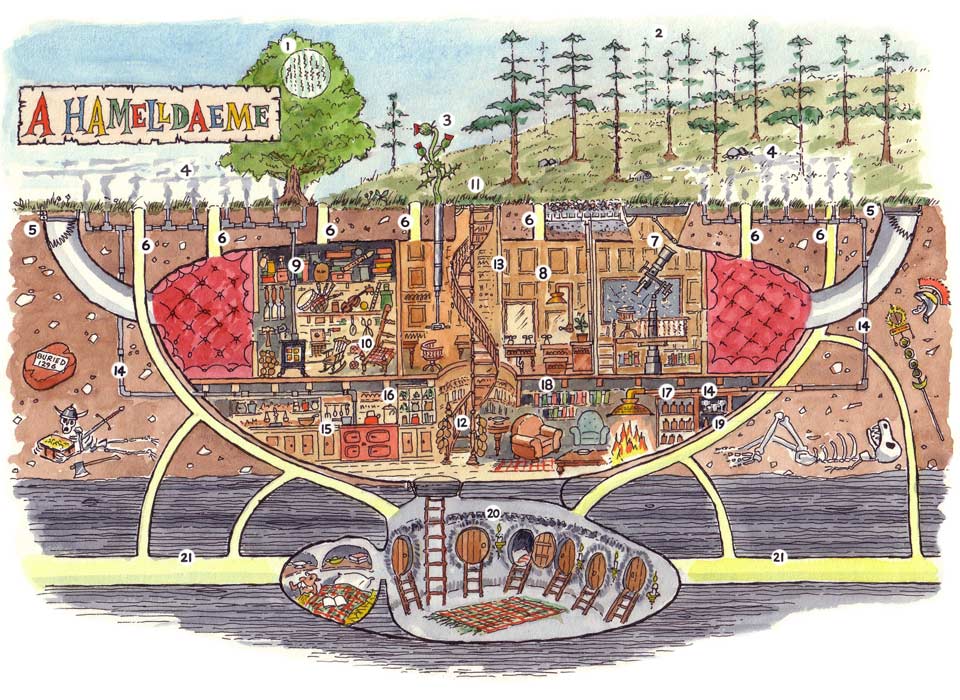
1: Wind Power
Ingenious machines hidden in tree branches bring power to the hamelldaeme. The wind vibrates through very fine mesh slats and this gentle motion generates electricity. The noise of these vibrating slats is heard easily by humans who nonetheless mistake it for the wind blowing through the leaves thus remaining unaware of these contraptions (N.B. the trees hiding these turbines are NEVER damaged by their installation).
2: Scots Pine
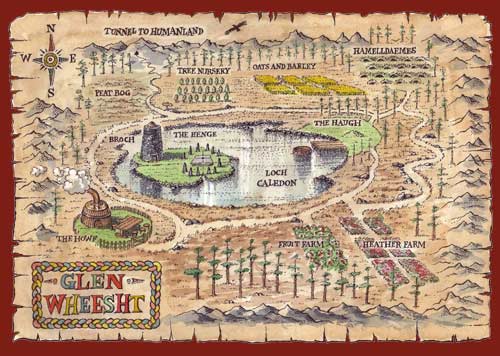
Young Scots Pine plantation. (This one is located towards the north east of Glen Wheesht).
3: Camouflaged Persicope
A periscope camouflaged as a thistle (though any local plant could be used) allows the haggis to spot danger before leaving the hamelldaeme. This room always has a haggis on lookout when family members are ‘topside’.
4: Chimney Nozzles
Smoke from the wood fires is dispersed via tiny nozzles hidden in the ground. To Humans, this smoke looks just like mist, particularly in the cooler autumn and winter evenings. A sure sign of hamelldaemes being nearby is low lying mist and the smell of smoke despite no human houses for miles around.
5: Trapdoors
At the base of marked trees are camouflaged trapdoors. These trapdoors spring shut the moment a haggis dives through them concealing the entrance. Fast slides end up in padded ‘crash’ rooms. These rooms are fitted with self – locking doors to delay pursuers further.
6: Concealed Lighting
Mirrored tubes draw the sun’s natural light down into the Hamelldaeme making them very bright during daylight hours. These shafts appear like rabbit burrows on the ‘topside’.
7: Telescope Room
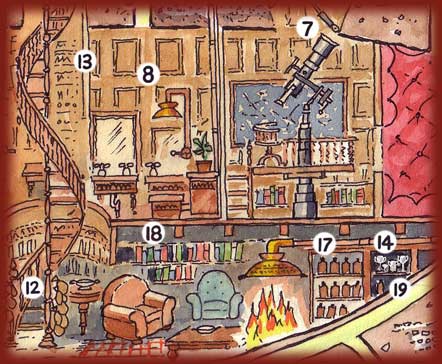
A telescope for star gazing. Note the hinged roof to allow access to the night sky and the hydraulic platform to lift the telescope and chair up to the surface in times of safety.
8: Bathroom
An eco–friendly bathroom where the ‘waste’ water is filtered through gravel and sand into a series of reed beds becoming pure water again.
9: Activities Room
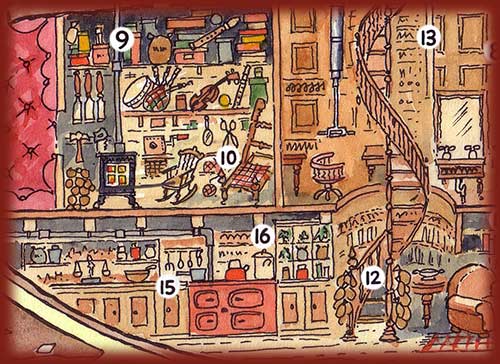
An activities room full of board games, musical instruments and wood – carving tools to help pass the long Winter nights (note the paw wound horn shaver between the stove and chair).
10: Haggis Tweed Loom
A loom for weaving clothes made from the finest (Haggis Tweed) wool.
11: Concealed Entrance
The main exit shaft concealed by a clump of grass. This access point is used only in times of safety.
12: Pine Seed Pouches
At the foot of the staircase, pouches of Scots Pine seed hang ready for use. A haggis never leaves home without one of these bags so that they can sow the seed wherever they travel thus helping to regenerate the Great Wood of Caledon.
13: Wood Panelling
Beautifully carved wood panelling and furniture adds to the solid and calm atmosphere throughout the haggis home.
14: Chimney Pipes
With chimney pipes leading out through the ceiling, wood burning stoves ensure that the hamelldaeme is always snug.
15: Kitchen
The kitchen is filled with practical utensils and a traditional oven. This is where the haggis eat meals and recount their day’s events to the rest of the family.
16: Larder
A larder brimming with natural Scottish food like oats, barley, heather, blueberries, honey etc.
17: Drinks Cabinet
A drinks cabinet full of Gloamin’s Glory – not to be consumed by haggis hogs!
18: Bookcase
A bookcase of well-thumbed editions covering subjects as varied as Bonsai tree sculpting, magical creatures, crop rotation and astronomy. Filed in the ‘horror’ section are the poems of Scotland’s National Bard, Robert Burns (he loved eating Haggis)!
19: Trophy Case
Trophies for Highland dancing, the Mod (singing) and bagpipe playing.
20: Haggis Holes
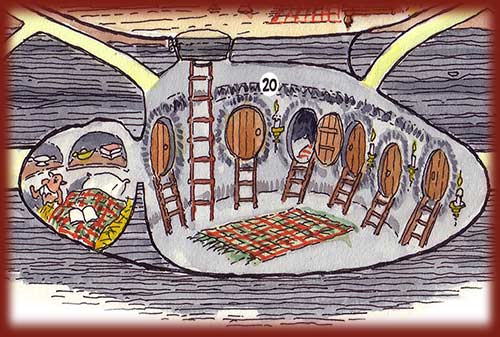
These snug nests of hay are where the haggis sleep. Shelves hold the few personal belongings that any haggis may have. The haggis holes are always chiselled into the bedrock in the lowest part of the Hamelldaeme. This is a safety measure in case they are attacked unawares. Any predator has to break through a bolted stone door before gaining access to the sleeping chambers. This difficult task gives the haggis time to flee along the escape tunnels situated on either side of the lowest level to adjoining hamelldaemes.
Hamelldaeme
The majority of Hairy Horny Haggis live in remote parts of the remnants of the Great Wood of Caledon.
Their homes are called Hamelldaemes and are shaped like a quaich (the traditional Scottish drinking cup of friendship). Hamelldaemes are grouped close to each other, to allow the haggis to find safety in numbers.
Hamelldaemes have three floors with each level becoming more restful the lower you descend. They are furnished simply yet functionally reflecting the Haggis enjoyment of woodland life.
Haggis homes are cosy yet defensive at the same time. Usually, only other haggis can recognise the tell tale signs of a hamelldaeme but if it is discovered by a predator, there are a number of safety features that allow the residents sufficient time to escape their attackers.